
Crock-Pot Lawsuit Claims ‘Easy-to-Clean’ Slow Cookers Made with Defective Nonstick Coating
Ventullo v. Newell Brands, Inc. and Sunbeam Products, Inc.
Filed: January 5, 2026 ◆§ 1:26-cv-10027
A lawsuit alleges certain Easy-to-Clean Crock-Pot slow cookers contain nonstick coating prone to bubble, flake and peel off into food being cooked.
Massachusetts
Crock-Pot faces a proposed class action lawsuit that alleges the nonstick Teflon coating in the company’s Easy-to-Clean line of slow cookers is prone to detach, bubble, flake, chip and peel off into food, rendering the product impossible to clean, ineffective for cooking, and wholly unfit for its intended use.
Get class action lawsuit and class action settlement news sent to your inbox – sign up for ClassAction.org’s free weekly newsletter.
According to the 58-page class action lawsuit, expert microscopy testing commissioned by the plaintiff has revealed that the nonstick coating used in the Crock-Pot 7-Quart Easy-to-Clean Cook and Carry Slow Cooker in black stainless steel and the Crock-Pot One Touch Control 6-Quart Easy-to-Clean Slow Cooker in stainless steel was produced with an “excess amount” of mica in the Teflon.
Per the case, this material defect creates separation between the Teflon and ceramic materials, essentially preventing the Teflon from properly adhering to the ceramic materials and causing the non-stick coating to “flake, bubble, chip, and peel” off the surface during everyday use.
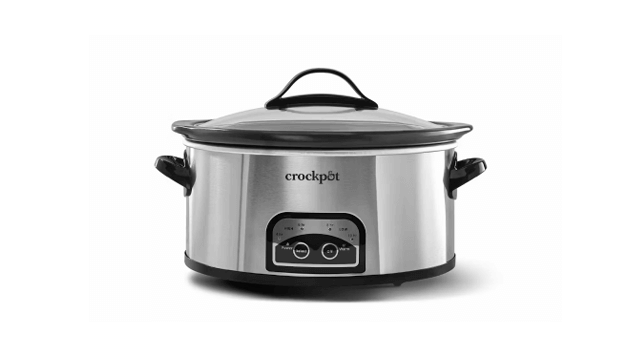 The lawsuit emphasizes that ingesting the nonstick coating poses a significant health risk to consumers. Per the complaint, the Teflon with which the nonstick coating is made contains synthetic chemicals known as per- and polyfluoroalkyl substances (PFAS)—forever chemicals—which can be harmful to human health.
The case says Crock-Pot deliberately represents on the slow cookers’ packaging that they have an “Easy to Clean Non-Stick PFOA-Free Coating.” However, the suit contends that Crock-Pot “knows or should have known” that reasonable consumers would understand that to mean the coating contains no PFAS at all, or “any other chemicals which could be harmful to human health if ingested.”
The filing alleges that the nonstick Teflon coating, in fact, contains polytetrafluoroethylene (PFTE), a plastic coating in the PFAS family. When the Teflon coating inevitably fails and begins migrating into consumers’ food, the case says, the food is not safe to be eaten.
The filing goes on to say that Crock-Pot “fails to acknowledge the defect or otherwise advise consumers about…the safety risks from Teflon ingestion.”
In addition to the considerable health risks of ingesting potentially toxic substances, the Teflon problem apparently plaguing the slow cookers also renders them “difficult or impossible to clean properly,” which contradicts the product’s “Easy-Clean” representations.
Moreover, the filing claims that Crock-Pot has breached the warranty on its slow cookers, which state that the products are “free from defects in material and workmanship” and are valid for one year after purchase. However, the warranty “excludes coverage for normal wear and tear,” and the lawsuit notes that consumers may interpret this to mean that Teflon failure is not covered because it typically occurs during foreseeable, reasonable use.
The filing alleges that the Crock-Pot defect is latent and that consumers cannot reasonably foresee that regular use of the product would cause it to fail. The lawsuit points out that the defective Crock-Pots at issue were no longer available for purchase on the Crock-Pot website as of November 1, 2025.
“The defect renders the products unsuitable for their intended purpose of cooking food and being Easy-to-Clean, as the failure of the nonstick coating can contaminate food; makes the products difficult or impossible to clean properly; and ultimately unfit for use for any purpose,” the filing summarizes.
The plaintiff purchased a Crock-Pot slow cooker in 2023 from Target for everyday household use, the case says. When making the purchase, the plaintiff believed Crock-Pot’s representations about the “performance, quality, and use of the slow cookers.” Per the complaint, the coating on the plaintiff’s slow cooker began to fail and flake off within one year of purchase.
The Crock-Pot false advertising class action lawsuit seeks to cover all United States residents who either purchased a new Crock-Pot slow cooker manufactured at the earliest time permitted by the statute of limitations, or received as a gift, from a donor meeting those requirements, a new slow cooker not used by the donor or by anyone else after the donor gave the slow cooker to the class member.
Check out ClassAction.org’s lawsuit list for the latest open class action lawsuits and investigations.
Video Game Addiction Lawsuits
If your child suffers from video game addiction — including Fortnite addiction or Roblox addiction — you may be able to take legal action. Gamers 18 to 22 may also qualify.
Learn more:Video Game Addiction Lawsuit
Kratom 7-OH Lawsuits
Anyone who has used 7-OH kratom products and suffered a serious injury, such as overdose, heart attack or addiction, may be able to take legal action.
Read more: Kratom 7-OH Lawsuits
How Do I Join a Class Action Lawsuit?
Did you know there's usually nothing you need to do to join, sign up for, or add your name to new class action lawsuits when they're initially filed?
Read more here: How Do I Join a Class Action Lawsuit?

Stay Current
Sign Up For
Our Newsletter
New cases and investigations, settlement deadlines, and news straight to your inbox.
Before commenting, please review our comment policy.