
Volkswagen Lawsuit Claims ID.4 SUVs Equipped With Defective High-Voltage Batteries Posing Fire Risk
Chen et al. v. Volkswagen Aktiengesellschaft et al.
Filed: May 13, 2026 ◆§ 2:26-cv-05409
A class action lawsuit says certain Volkswagen ID.4s contain defective high-voltage batteries that pose a risk of thermal events and vehicle fires.
A proposed class action lawsuit alleges that Volkswagen has concealed a dangerous defect in the high-voltage (HV) lithium-ion batteries installed in certain 2023-2025 ID.4 SUVs that can cause the vehicles to overheat, catch fire or otherwise suffer catastrophic damage.
Want to stay in the loop on class action lawsuits that matter to you? Sign up for ClassAction.org’s free weekly newsletter.
The 77-page lawsuit contends that Volkswagen has continued to market the all-electric ID.4 as an intelligently engineered, safe and forward-looking vehicle despite knowing that the SUVs were plagued by defective battery systems susceptible to “thermal events”— sometimes during Level 3 DC charging, the most efficient and quickest form of vehicle charging—or while parked and not charging, or while driving. 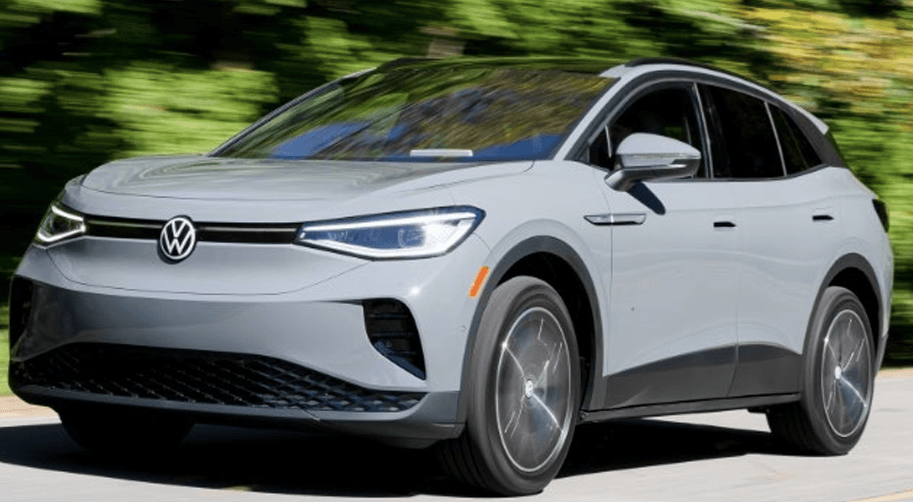
According to the complaint, the VW defect stems from electrode misalignment within the high-voltage battery’s power-generating compartments, called cells. The suit explains that electrodes store lithium, and electrolytes carry lithium ions from a negative electrode (anodes) to positive electrode (cathode) in the form of electricity or vice versa, from cathode to anode, when a cell is charging.
The class action lawsuit says that VW has admitted that the battery maker SK Battery America, after reviewing damaged cell modules, “found that the damaged cell modules contained shifted cathodes.”
The lawsuit says that the automaker received several reports of battery-related thermal events between January 2024 and August 2025, with some incidents tied to high-voltage battery charging at Level 3 chargers and others occurring while a vehicle was parked and not charging.
Per the complaint, Volkswagen did not begin to issue recalls until late 2025, nearly two years after it first learned of an ID.4 battery fire, despite having access to testing results, consumer complaints and internal data that should have revealed the defect before ID.4 drivers were put at risk.
In December 2025, Volkswagen issued the first of three recalls tied to what it described as a “quality deviation” in the battery electrodes, an initiative that initially covered 311 vehicles before being expanded to 629 vehicles, the suit relays. As part of the recall, drivers were instructed to avoid Level 3 DC chargers, limit charging capacity to 80 percent and avoid charging vehicles indoors overnight, the filing says.
The complaint relays that Volkswagen later issued two additional recalls in January 2026, which in total covered tens of thousands of vehicles. According to the suit, the automaker offered free battery health inspections for one recall, and software updates and replacements as needed in affected vehicles models.
The lawsuit argues that Volkswagen, before selling the vehicles, should have discovered the ID.4 battery defect through standard pre-sale testing and validation procedures routinely used in the automotive industry.
“The use of better safety systems and more rigorous testing would have prevented the reported thermal event and battery fire incidents in the Class Vehicles and the significant cost and inconvenience now visited upon Plaintiffs and members of the Class,” the filing asserts.
Similarly, the suit points to a 2017 National Highway Traffic Safety Administration report that warned manufacturers about the dangers of lithium-ion battery “thermal runaway” events, a phenomenon whereby the lithium-ion cell in a high-voltage battery enters an “uncontrollable, self-heating state” capable of causing fires and explosions.
Despite these documented risks, the suit alleges, Volkswagen continued to market the vehicles at issue as dependable and safe long-term investments. According to the complaint, Volkswagen heavily promoted the ID.4 as the “future of driving” and backed the SUVs with a four-year/50,000 new vehicle limited warranty and an eight-year/100,000-mile battery-specific warranty coverage.
However, the lawsuit alleges that consumers have been left with vehicles of diminished value, with charging restrictions and safety concerns given the ongoing risk of battery failure.
The Volkswagen ID.4 class action lawsuit seeks to represent all individuals and entities who purchased or leased a 2023-2025 Volkswagen ID.4 in the United States.
Looking for current class action lawsuits to join? Check out ClassAction.org’s class action lawsuit list.
Video Game Addiction Lawsuits
If your child suffers from video game addiction — including Fortnite addiction or Roblox addiction — you may be able to take legal action. Gamers 18 to 22 may also qualify.
Learn more:Video Game Addiction Lawsuit
Kratom 7-OH Lawsuits
Anyone who has used 7-OH kratom products and suffered a serious injury, such as overdose, heart attack or addiction, may be able to take legal action.
Read more: Kratom 7-OH Lawsuits
How Do I Join a Class Action Lawsuit?
Did you know there's usually nothing you need to do to join, sign up for, or add your name to new class action lawsuits when they're initially filed?
Read more here: How Do I Join a Class Action Lawsuit?

Stay Current
Sign Up For
Our Newsletter
New cases and investigations, settlement deadlines, and news straight to your inbox.
Before commenting, please review our comment policy.