
Hatch Sound Machine Class Action Lawsuit Claims Hatch Go, Rest Go Pose Hearing Loss Risk for Babies
Ellsworth v. Hatch Baby, Inc.
Filed: November 3, 2026 ◆§ 5:26-cv-12842
A class action lawsuit alleges Hatch Baby has filed to warn that its Rest Go (now the Hatch Go) infant sound machines pose a hearing loss risk.
California Business and Professions Code California Unfair Competition Law California Consumers Legal Remedies Act Song-Beverly Consumer Warranty Act
California
Hatch Baby, Inc. faces a proposed class action lawsuit over its alleged failure to warn that its Rest Go (now sold as the Hatch Go) infant sound machines pose a hearing loss risk for infants when used at too high a volume, located too close to a child’s ears or used for too long a period of time.
Get class action lawsuit and class action settlement news sent to your inbox – sign up for ClassAction.org’s free weekly newsletter.
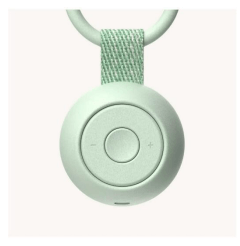 The 45-page lawsuit claims that Hatch has “entirely omit[ted]” the fact that the white noise sound machines at issue—which are designed to be used on the go, attached to car seats, strollers or cribs—do not meet regulatory standards or scientific, medical or industry guidance for infant auditory exposure limits. According to the filing, the Hatch Go sound machines exceed the threshold decibel limit for infants and “inappropriately promote” continued, prolonged usage in close proximity to children’s ears.
The complaint says that Hatch is well aware of the hearing-loss risk posed by the infant sound machines yet has continued to advertise the products without disclosing the risk in order to maintain sales and profits and continue to sell the machines.
“Worse still, Defendant’s pervasive marketing and advertising campaign encourages dangerous uses that heighten the Hearing Loss Risk, while failing to warn of that risk,” the case adds.
Per the suit, no reasonable consumer would purchase, or pay the amount they did, for a Hatch Go/Rest Go sound machine had they known the products pose a risk of hearing loss for children.
The class action lawsuit states that many studies have shown that noise exposure at an early age may contribute to an increased level of hearing loss later in life, even after the exposure has stopped. The filing also mentions that, per the World Health Organization, a child’s developing physiology and psychology make them vulnerable to noise exposures that may be less harmful to adults.
Unbeknownst to consumers, the suit says, scientific and medical literature on infant sound machines and white noise usage concludes that using the Hatch sound machines as intended poses a hearing-loss risk and that the products themselves fall short of scientific, medical and industry guidance and regulatory standards.
“This information is material to reasonable consumers when purchasing an infant sound machine,” the case asserts.
Ironically, the lawsuit says, Hatch acknowledged the guidance and standards for infant sound machines and the associated hearing loss risk in a 2024 blog post. According to the case, the post cited a 2023 warning from the American Academy of Pediatrics regarding noise exposure for children yet represented that parents should not be concerned unless their sound machine exceeds 85 decibels of sound all night.
The filing argues that the Hatch blog post is “wholly insufficient” as a warning for consumers regarding the Hatch Go hearing loss risk.
“Nowhere on the Infant Sound Machines’ labeling, packaging or on the product webpages does Hatch disclose the Hearing Loss Risk,” the lawsuit reiterates. “To the contrary, Hatch’s Infant Sound Machines provide no warning as to the risks of prolonged exposure to high-decibel volumes of white noise.”
The Hatch Go sound machine lawsuit looks to cover all individuals who bought a Rest Go (now sold as the Hatch Go) infant sound machine in the United States for personal or household use and not for resale during the fullest period allowed by law.
Did you know that some class action settlements require no proof to submit a claim? Check out the latest open class action settlements.
Video Game Addiction Lawsuits
If your child suffers from video game addiction — including Fortnite addiction or Roblox addiction — you may be able to take legal action. Gamers 18 to 22 may also qualify.
Learn more:Video Game Addiction Lawsuit
Kratom 7-OH Lawsuits
Anyone who has used 7-OH kratom products and suffered a serious injury, such as overdose, heart attack or addiction, may be able to take legal action.
Read more: Kratom 7-OH Lawsuits
How Do I Join a Class Action Lawsuit?
Did you know there's usually nothing you need to do to join, sign up for, or add your name to new class action lawsuits when they're initially filed?
Read more here: How Do I Join a Class Action Lawsuit?

Stay Current
Sign Up For
Our Newsletter
New cases and investigations, settlement deadlines, and news straight to your inbox.
Before commenting, please review our comment policy.