
Class Action Lawsuit Alleges Recalled Casely Portable Power Pods Prone to Overheating, Igniting
Ayala v. Casely, Inc.
Filed: May 21, 2026 ◆§ 2:26-cv-03096
A class action lawsuit claims Casely failed to warn that its Power Pods 5000mAh portable MagSafe power banks suffer from a dangerous overheating defect.
New York
A proposed class action lawsuit claims that Casely, Inc. failed to warn consumers that its Power Pods suffered from a dangerous lithium-ion battery defect that could cause the portable wireless power banks to overheat, swell, catch fire and/or explode.
Get class action lawsuit and class action settlement news sent to your inbox – sign up for ClassAction.org’s free weekly newsletter.
The 28-page complaint relays that the battery-overheating defect in Casely’s Power Pods 5000mAh portable MagSafe wireless power banks, Model E33A, led to a “renewed” nationwide recall of the devices announced by the U.S. Consumer Product Safety Commission (CPSC) in April 2026.
According to the lawsuit, Casely marketed the power banks, which reportedly sold for between $30 and $70, as fit for their intended purpose despite knowing about the devices’ propensity to overheat and potentially ignite.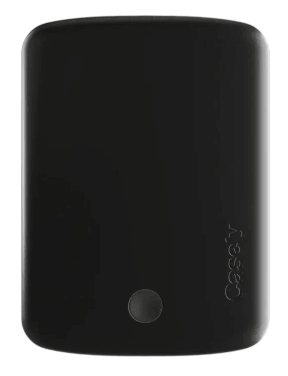
“Those representations about safety were false and misleading, and the Affected Product, by Defendant’s own admission, is not safe,” the class action lawsuit summarizes.
The suit claims that the company promoted the Power Pods as “suitable for safe, convenient, and continuous operation” and that the devices were built using “cutting-edge technology.” Per the filing, Casely’s representations of the wireless chargers led reasonable consumers to believe that the power banks were equipped with adequate safety mechanisms to prevent overheating and battery failure during ordinary use.
However, the lawsuit charges that, despite Casely’s advertising, the power banks at issue were “not safer or more reliable than lower-cost alternatives and, in fact, contained a dangerous defect” plaguing the devices’ lithium-ion batteries.
The case states that approximately 429,200 units were recalled last month, covering devices that were previously subject to an April 2025 recall that was issued following 51 reports of the power banks’ lithium-ion batteries overheating, expanding or catching fire during phone charging, resulting in six minor burn injuries.
According to the complaint, the 2026 “reannouncement” of the recall came after 28 additional reports of overheating, expansion, and fire following the initial recall initiative, including one incident aboard an airplane and one reported fatality.
“This sequence of events demonstrates that the defect in the Affected Product was severe and widespread, and that it was not adequately addressed at the time of the initial recall,” the complaint charges.
Although consumers impacted by the recall were instructed to immediately cease use of the affected devices and contact the company to receive a replacement device or store credit, the lawsuit contends that Casely’s recall remedy is inadequate, given that consumers must navigate a “cumbersome” multi-step verification process and may not want to receive a replacement from a company they no longer trust.
The suit further contends that Casely should have known about the defect through consumer complaints, incident reports, presale testing and widely-recognized risks associated with the lithium-ion batteries.
In particular, the complaint references the “known characteristics” of lithium-ion battery technology across multiple manufacturing industries, including a phenomenon known as thermal runaway, whereby a battery’s cell generates heat more quickly than can be dissipated, potentially resulting in fire or explosion.
The Casely class action lawsuit looks to represent all individuals who purchased one or more Casely Power Pods 5000mAh portable wireless power banks, Model E33A, in the United States for personal or household use during the applicable statute of limitations period.
Check out ClassAction.org’s lawsuit list for current class action lawsuits.
Video Game Addiction Lawsuits
If your child suffers from video game addiction — including Fortnite addiction or Roblox addiction — you may be able to take legal action. Gamers 18 to 22 may also qualify.
Learn more:Video Game Addiction Lawsuit
Kratom 7-OH Lawsuits
Anyone who has used 7-OH kratom products and suffered a serious injury, such as overdose, heart attack or addiction, may be able to take legal action.
Read more: Kratom 7-OH Lawsuits
How Do I Join a Class Action Lawsuit?
Did you know there's usually nothing you need to do to join, sign up for, or add your name to new class action lawsuits when they're initially filed?
Read more here: How Do I Join a Class Action Lawsuit?

Stay Current
Sign Up For
Our Newsletter
New cases and investigations, settlement deadlines, and news straight to your inbox.
Before commenting, please review our comment policy.